If you are wondering how to clean stove grates after grease and food residue have built up over time, the good news is that a few simple cleaning methods can help restore their appearance and improve cooking performance.
The key is using effective cleaning methods that remove grease without damaging the grate finish or creating safety concerns. This guide explains how to clean stove grates using practical methods and how to prevent buildup.
How to Clean Stove Grates Without Damaging Your Range
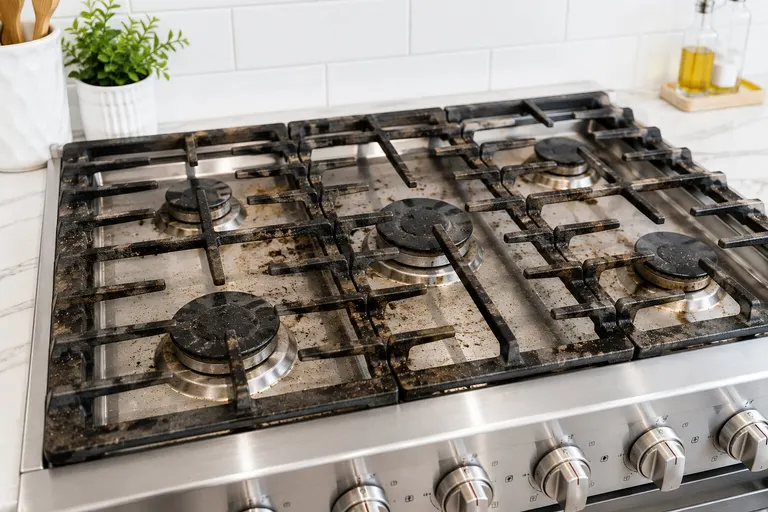
Stove grates collect spills, oil splatter, and food residue every time you cook. When that buildup hardens, it can become harder to remove and may even affect how evenly your cookware sits over the flame or heating surface.
Different grate materials can react differently to moisture, scrubbing, and cleaning products. The cleaning tips below are commonly safe for coated cast iron, porcelain-coated, and metal stove grates when used gently, but always follow your appliance manufacturer’s care instructions.
Soak Stove Grates in Hot Soapy Water
A hot, soapy soak is one of the most effective starting points for greasy stove grates. Dish soap helps break down oil, while warm water softens food residue that has hardened onto the surface.
- Use hot water and grease-cutting dish soap.
- Let the grates soak until residue begins to loosen.
- Scrub gently with a non-abrasive pad or soft brush.
- Rinse well to remove soap film.
- Dry completely to help prevent rust or discoloration.
This method works best for everyday grease and moderate buildup. If residue remains after soaking, move to a stronger cleaning method rather than scrubbing aggressively.
If grease buildup returns quickly or the burner area still smells after cleaning, professional range service may be needed to check for trapped residue or performance issues.
Use Baking Soda for Burnt-on Grease
Baking soda is useful for sticky, burnt-on spots because it creates a mild cleaning paste without being overly harsh on many grate finishes. It can help lift dark residue and reduce the need for heavy scrubbing.
- Mix baking soda with a small amount of water to form a paste.
- Spread the paste over greasy or stained areas.
- Let it sit so the residue can soften.
- Wipe or scrub gently with a soft brush or non-abrasive pad.
- Rinse and dry thoroughly.
This is a helpful option when soap and water do not fully remove baked-on grease. It is also a good choice for homeowners who want to avoid strong chemical smells in the kitchen.
If the grates remain heavily stained or the surface appears damaged, a technician can help determine whether the issue is cosmetic wear, heat damage, or a range performance concern.
Apply Vinegar to Break Down Greasy Film
Vinegar can help cut through greasy film and light mineral residue. It is especially helpful when stove grates feel sticky even after washing.
- Spray or wipe white vinegar onto the grate surface.
- Let it sit briefly to loosen residue.
- Wipe clean with a damp cloth.
- Repeat on stubborn greasy areas.
- Dry completely before returning grates to the cooktop.
Vinegar is best for surface residue, not thick layers of hardened grease. For heavier buildup, it can be paired with baking soda, but avoid using abrasive force that could damage coated grates.
If odors or visible residue remain around the burner area after the grates are cleaned, professional service can help identify buildup or component issues that are not visible from the surface.

Clean Around the Cooktop Surface
Knowing how to clean stove grates also includes caring for the surrounding cooktop surface. Grease often spreads beyond the grates and settles near burner caps, knobs, and the cooking surface.
- Wipe the cooktop surface once it is cool.
- Remove loose crumbs and food debris.
- Use cleaner approved for your cooktop finish.
- Avoid forcing liquid into burner openings or control areas.
- Keep knobs and surrounding surfaces free of sticky residue.
Surface cleaning helps reduce odors and prevents grease from baking onto nearby areas the next time the appliance is used.
If buildup appears inside burner openings or under fixed components, leave that inspection to a professional rather than attempting to open or move appliance parts.
Avoid Harsh Cleaners and Abrasive Tools
Some stove grates can be damaged by harsh cleaners, metal brushes, or abrasive pads. Before using any stronger cleaning product, check your owner’s manual and test gently.
If soap, baking soda, or vinegar does not remove the buildup, repeat the process rather than scrubbing aggressively.
How to Prevent Grease from Building Up Again
Preventing heavy buildup is often easier than removing burnt-on grease after it hardens.
A few consistent habits can help keep stove grates cleaner between deeper cleanings.
Helpful tips:
- Wipe spills after the cooktop has cooled.
- Clean grease splatter before it burns onto the grates.
- Avoid letting sugary sauces, oils, or food debris sit for days.
- Dry grates well after cleaning.
- Use cookware that sits evenly on the grate surface.
These habits help reduce stubborn residue and help protect the finish of your grates over time. For more kitchen cleaning tips, visit this helpful guide on how to clean your oven.
If grease buildup becomes unusually heavy despite regular cleaning, a technician can check whether burner performance or appliance condition is contributing to the problem.
Final Thoughts on How to Clean Stove Grates
Learning how to clean stove grates can help keep your kitchen cleaner, reduce burnt odors, and support better cooking performance.
When cleaning does not resolve uneven heating, burner issues, clicking, or persistent odors, professional service is the best next step. If these issues continue after surface cleaning, contact our Coquitlam range and oven repair experts at Priority Appliance for professional diagnosis and service.