If your Miele washer smells unpleasant, the source may be something as simple as lingering moisture or detergent residue. A musty, sour, or stale odor can develop gradually, especially when damp conditions remain inside the drum between loads.
Fortunately, many washer odors are connected to routine use and maintenance habits rather than an immediate appliance failure. Understanding where the smell may be coming from can help you make safe adjustments and recognize when professional service is the better next step.
If Your Miele Washer Smells, Check for These Common Causes
Miele identifies several conditions that can contribute to unpleasant washing machine odors, including wet laundry left in the drum, moisture trapped inside the machine, incorrect detergent amounts, and the need for periodic machine cleaning.
Here are some of the most common causes to consider, starting with everyday laundry habits and moving toward problems that may require professional attention.
1. Wet Laundry Sits in the Washer Too Long
Freshly washed clothing contains plenty of moisture. When a finished load remains inside a closed washer for an extended period, that warm, damp environment can contribute to unpleasant odors in both the laundry and the machine.
Miele recommends removing laundry promptly after the wash program finishes. If you regularly notice that clothing smells stale after sitting in the drum, changing this habit may help prevent the odor from returning.
Try to unload the washer soon after each cycle ends. This also gives the interior of the machine an opportunity to begin drying.
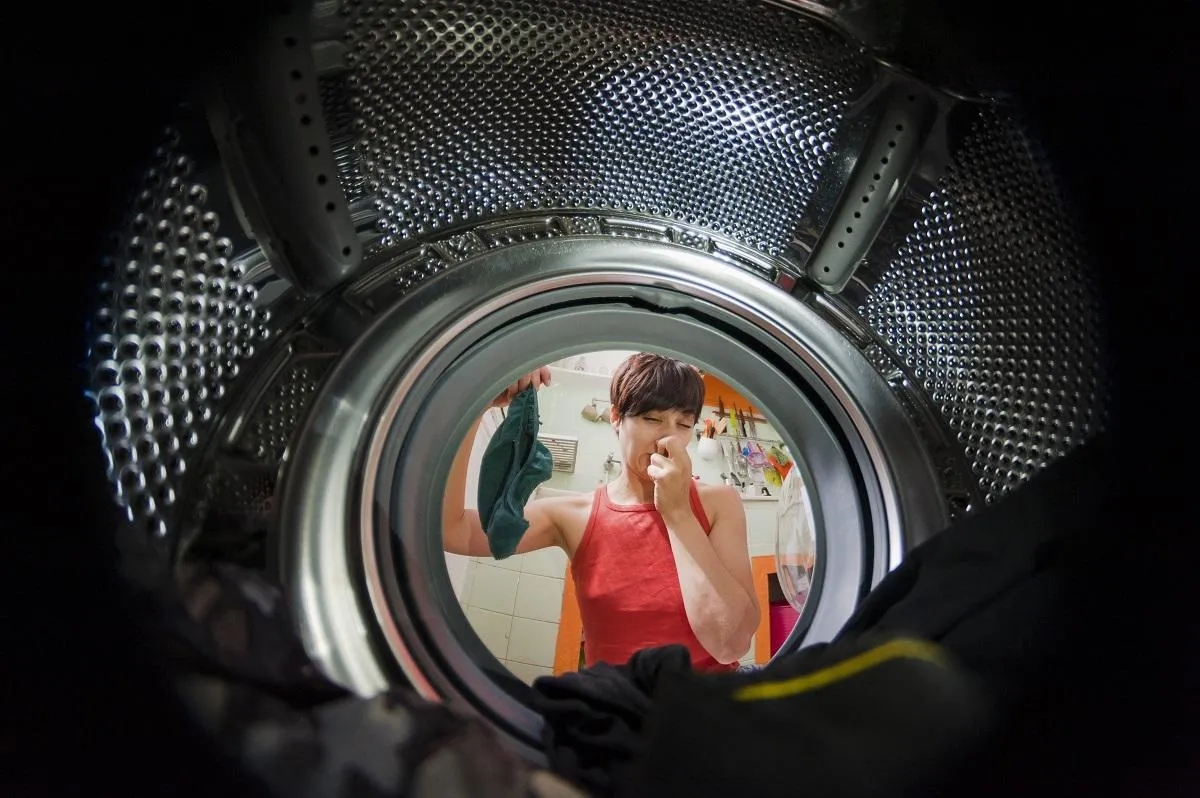
2. Trapped Moisture Stays Inside Between Loads
Moisture can remain in the drum, around the door area, and near the detergent dispenser after a wash cycle. Closing everything immediately can trap that moisture inside and create conditions where odors are more likely to develop.
To help the washer dry between loads:
- Remove finished laundry promptly.
- Leave the washer door slightly open when the machine is not in use.
- Leave the detergent drawer slightly open so moisture can escape.
- Wipe away easily accessible moisture around the door area with a clean cloth.
These are all surface-level care steps. There is no need to open panels or access internal components to help reduce trapped moisture.
3. Excess Detergent Leaves Odor-Causing Residue
Adding extra detergent may seem like a way to get laundry cleaner, but excessive detergent can create its own problems. One possible cause of lingering residue is using too much laundry detergent.
Too much detergent can contribute to:
- Excess suds during the wash cycle
- Residue left on clothing or inside the washer
- Buildup in frequently damp areas
- Musty or stale odors that return over time
The correct detergent amount can vary based on load size, how heavily soiled the laundry is, and local water hardness. Following the detergent manufacturer's recommendations and your Miele owner's manual can help limit unnecessary residue.
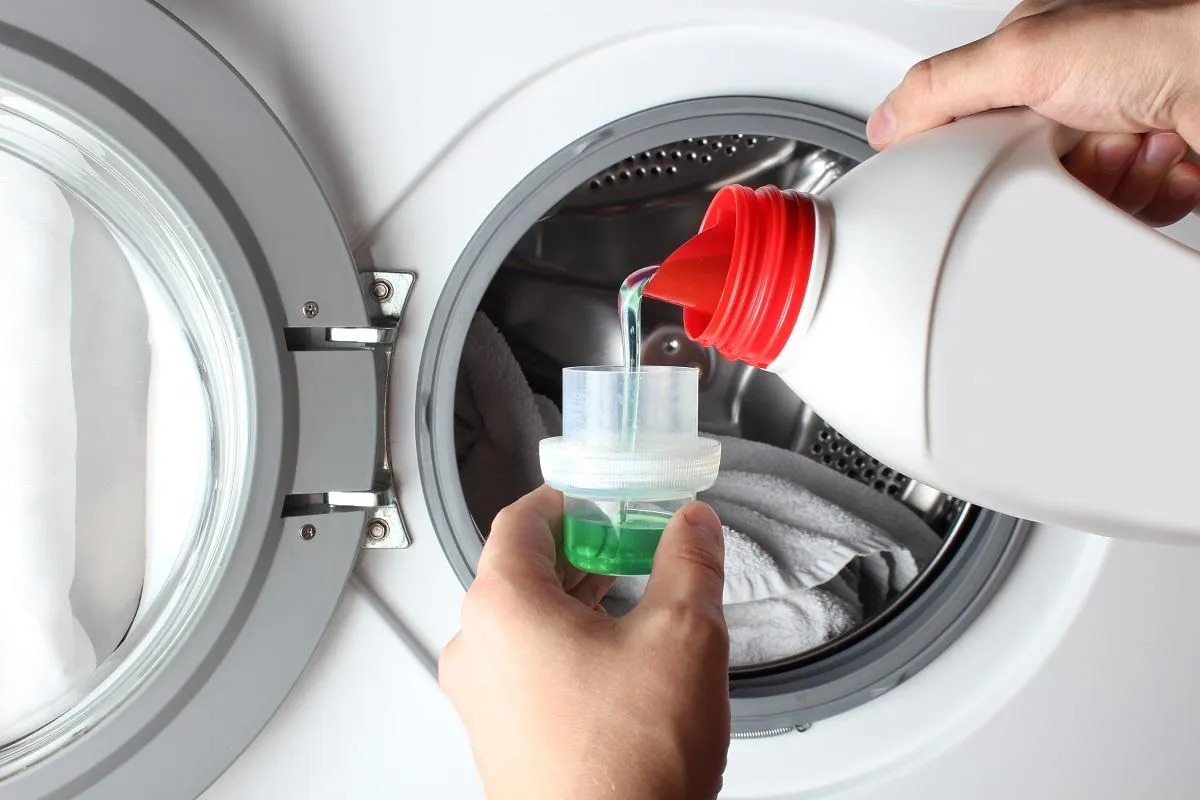
4. Detergent and Fabric Softener Buildup in the Dispenser
The detergent dispenser is another area where residue can accumulate. Detergent, fabric softener, and moisture regularly pass through this part of the machine, making it important to keep accessible surfaces clean.
Look for visible residue around the dispenser area and clean only the parts your Miele owner's manual identifies as appropriate for routine owner maintenance. Detergent and fabric softener buildup can contribute to unpleasant smells when it remains in a damp area.
Regular surface cleaning can help prevent residue from becoming more noticeable. If buildup appears to be coming from somewhere that cannot be safely reached without disassembly, leave further inspection to a qualified appliance technician.
5. Frequent Low-Temperature Washing Encourages Odors
Cooler wash programs can be useful for many fabrics, but consistently washing at low temperatures may allow conditions that contribute to unpleasant odors inside the washer.
Why it matters: Lower-temperature washing may not address accumulated residue and odor-causing buildup as effectively as the maintenance procedures recommended for your machine.
What to consider: Miele recommends periodic higher-temperature washing or the manufacturer's designated cleaning program, depending on the model.
Best practice: Always follow the care requirements of your laundry and the instructions for your specific washer. Your owner's manual is the best source for identifying the appropriate maintenance program and settings for your Miele model.
6. Washer Cleaning Program Is Overdue
Many Miele washing machines include a Clean Machine program or another manufacturer-recommended maintenance cycle. Some models may also display a reminder when cleaning is needed.
These programs are designed to address residue and odor buildup without requiring you to take the washer apart. Follow the cleaning instructions for your specific machine and use the designated program as directed.
If odors keep returning even though you are following the recommended maintenance schedule, there may be another issue contributing to the problem.
7. Persistent Odors May Signal Drainage or Internal Problems
An odor that remains after routine cleaning and moisture management may need professional attention. Standing water, drainage concerns, or buildup in areas that are not safely accessible to the homeowner can all require a technician to diagnose the appliance properly.
Watch for additional warning signs, such as:
- Water remaining where it normally should not
- Unusual noises during operation
- Odors that return quickly after cleaning
- Changes in normal washer performance
Avoid opening panels, accessing internal hoses, or attempting to disassemble a drain pump or other washer components. Technical diagnosis can involve mechanical and electrical systems that should be handled by a trained professional.
Other symptoms may also point to a broader appliance problem. If your washer won't turn on, professional diagnosis can help determine whether the problem is connected to a component or control issue. Likewise, if your washing machine leaks water, discontinue unnecessary use and have the source of the leak professionally evaluated.
Keep Your Miele Washer Fresh with Proper Care
A clean-smelling washer starts with controlling moisture, using an appropriate amount of detergent, removing finished laundry promptly, and following Miele's recommended maintenance schedule. These routine habits can help reduce the conditions that allow unpleasant odors to develop.
When an odor repeatedly returns despite regular maintenance, deeper DIY troubleshooting is not recommended. Internal drainage, mechanical, and electrical problems require proper diagnosis before a safe and reliable repair can be made.
For professional washing machine repair in Vancouver, contact Priority Appliance Service. Our Miele repair professionals can diagnose persistent washer problems and determine the appropriate repair to help restore dependable performance.