You open the fridge, and something looks off. The rubber seal around the door has peeled away from the frame, bowing out like a loose page in a binder. That's exactly what one of our Vancouver customers found on their Miele refrigerator this fall. The part that caught our attention? It was the second time the seal had failed, in the exact same spot.
A repeat failure in the same place
We first serviced this Miele refrigerator over the summer. Parts were ordered through our supplier, and our technician completed the repair in September. A month later, the homeowner called us back. The door seal was separating again, and the photo they sent showed it pulling away in the same location and the same way as before.
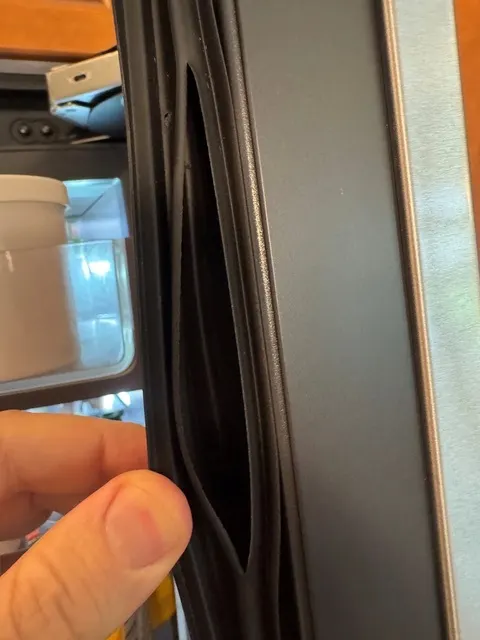
From across the kitchen, the door still looked closed. Up close, there was a clear gap along the edge where cold air could escape.
One failed seal can be bad luck. Two failures in the identical spot usually point to something bigger. As the homeowner put it, at that point you start looking at the design or the seal material itself. We agree, and we are seeing this pattern on Miele refrigerators often enough right now that we wanted to share it.
Why a small gap is a big deal
The door seal (also called a gasket) is the flexible strip that lines the inside edge of the refrigerator door. When the door closes, the seal presses against the cabinet and locks cold air in and warm, humid kitchen air out.
When even a few inches of that seal lifts, a few things start to happen:
- The compressor works overtime. Your fridge runs longer to make up for the leak, which raises your energy bill and adds wear to the cooling system.
- Moisture gets in. Humid room air turns into condensation, frost on the back wall, or ice buildup in the freezer.
- Food doesn't stay as cold. Items near the door warm up first, and fresh food can spoil faster.
A premium refrigerator like a Miele is built to hold tight, consistent temperatures. A leaky seal undoes that quietly, one door opening at a time.
What causes a refrigerator door seal to pull away?
Not every failed seal is a manufacturing problem. Plenty of everyday habits can loosen, tear, or warp a gasket. Here are the most common causes we see in the field:
1. Sticky spills and food residue. Juice, syrup, jam, or soda drips along the bottom of the door and dries like glue. The next time you open the fridge, the seal sticks to the cabinet and gets tugged out of its track. Do that a few hundred times and the seal starts to stretch or tear.
2. Harsh cleaners. Bleach, solvents, citrus-based degreasers, and abrasive pads break down rubber over time. The seal dries out, cracks, or loses its shape and stops sitting flat.
3. Pulling on the seal instead of the handle. Grabbing the door edge or the gasket itself to open the fridge puts stress right where the seal attaches. Little hands do this a lot.
4. A sagging or misaligned door. Heavy items packed into the door shelves, a loose hinge, or a refrigerator that isn't level can all pull the door slightly out of square. The seal then gets pinched or pressed unevenly, and the weakest spot gives first.
5. Something blocking the door. A container edge or a drawer that sticks out keeps the door from closing fully. The seal gets folded or crushed in that spot day after day.
6. Age and heat. Rubber naturally hardens over the years. A fridge installed next to an oven, dishwasher, or sunny window ages faster.
7. Installation. If a replacement seal isn't fully seated in its channel around the entire door, one section can work loose within weeks.
8. Design or material defects. Sometimes the seal itself, or the way it attaches to the door, is the weak link. That's what appears to be happening on the Miele refrigerator in this case.
Design issue or everyday damage? How to tell
Here's a quick way to read what you're seeing on your own fridge.
It's more likely a design or material issue when:
- The seal fails in the same spot again after being replaced
- The rubber looks clean, soft, and undamaged, but has lifted out of its track
- The door is level, closes squarely, and nothing is blocking it
- Other owners of the same model report the same problem
It's more likely everyday wear or damage when:
- The seal feels tacky or has visible residue, especially along the bottom
- The rubber is torn, cracked, stiff, or discolored
- The damage sits near the handle or where hands usually grab
- The door sags, sticks, or doesn't swing closed on its own
Knowing which one you're dealing with matters. A design issue may be worth raising with the manufacturer, while a residue or alignment problem can often be fixed for good once the cause is handled.
What to do if your Miele door seal is pulling away
- Check the full length of the seal. Run your eyes along every side, paying close attention to the corners and the hinge side.
- Try the paper test. Close the door on a sheet of paper. If it slides out with no resistance, that section isn't sealing.
- Take a photo. Just like our customer did. It helps our technician show up with the right part for your model.
- Clean gently. Warm water with a little mild dish soap and a soft cloth removes sticky buildup without harming the rubber.
- Don't glue or force it. Adhesives and stretching can damage the seal and the door channel, making a proper replacement harder.
If your Miele fridge seal is lifting, gapping, or failing again after a replacement, our Miele appliance repair team can diagnose whether it's the seal, the door alignment, or something else. Learn more about our refrigerator repair service, or call us at 604.736.9897 to book a visit.
Frequently asked questions
Can I push a refrigerator door seal back into place myself?
If the seal has popped out of its track and isn't damaged, it can sometimes be gently pressed back in. If it keeps coming loose, is torn, or failed after a recent replacement, have a technician look at it so the real cause gets fixed.
How long should a refrigerator door seal last?
With regular cleaning and normal use, a door seal often lasts many years. Seals that fail within months usually point to a door alignment issue, an installation problem, or a defect in the part.
Will a bad door seal damage my refrigerator?
Over time, yes. A leaking seal makes the compressor run longer, adds moisture inside the cabinet, and can lead to frost buildup and higher energy use.
Is a separating Miele door seal covered by warranty?
It depends on your model, purchase date, and the cause of the failure. A technician's diagnosis and photos of the issue help if you plan to contact Miele.